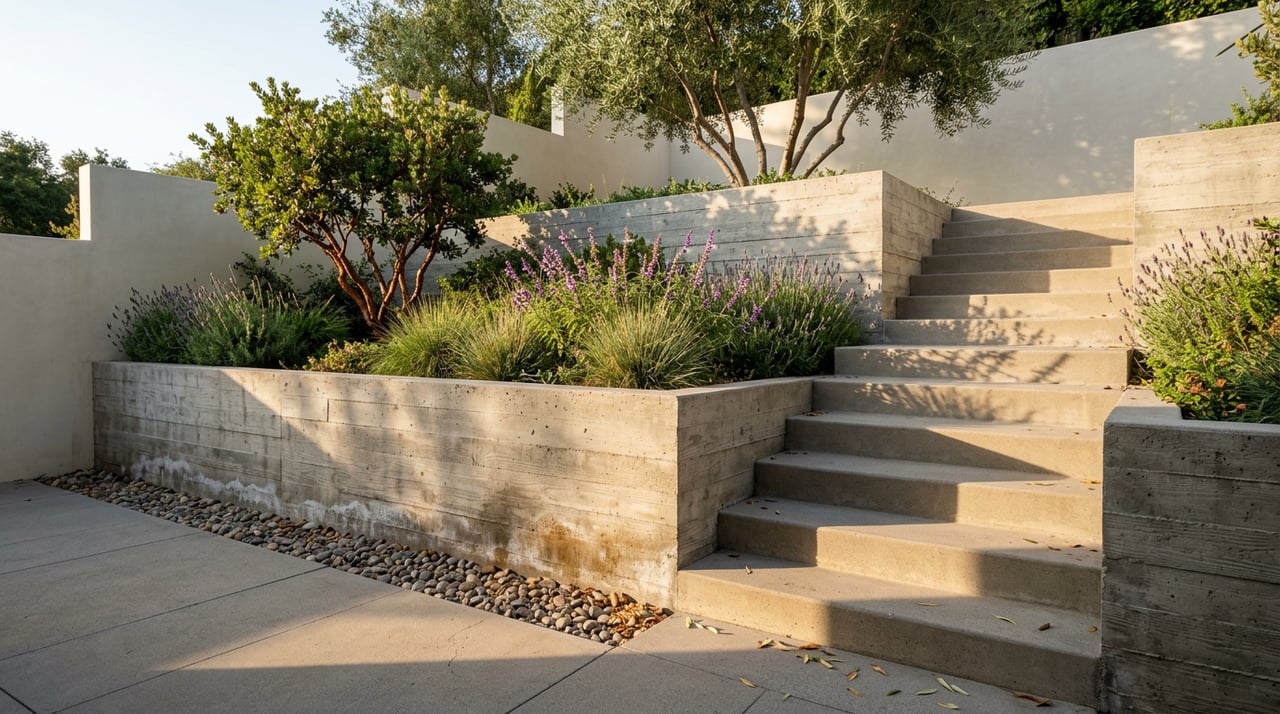
A seller on Micheltorena Hill lists in July. The house shows beautifully: terraced garden, a private upper deck, the kind of layered outdoor space that makes hillside living in Silver Lake worth the stairs. An offer comes in within the first two weeks. Then escrow opens, the buyer's lender orders a title and permit search, and the numbers on the report don't match the walls in the yard. Two retaining walls, no permits on file. The buyer's engineer prices the fix. The buyer's insurer asks questions the seller has never had to answer before. By the time everyone agrees on a number, the seller has given up a five-figure credit on a feature they never thought of as a liability, because the wall has been sitting there quietly holding up the yard for twenty years.
This is not a rare outcome on a Silver Lake hillside sale in 2026. It is close to the default outcome when a seller doesn't know what documentation their property is missing before the sign goes up.
The wall was never the problem. The file behind it is.
Silver Lake sits in one of the steepest pockets of central Los Angeles, with slopes reaching 45 percent or more in some pockets and a base of basalt bedrock that shapes how every retaining wall, terrace, and foundation on the hill has to be engineered. Under the city's Baseline Hillside Ordinance and the grading rules layered on top of it, retaining walls above a certain height require a permit and an engineered design, and any wall involving stacked sections, tie-backs, or drainage behind it gets extra scrutiny during plan check. The Los Angeles Department of Building and Safety also requires grading permits for earthwork in designated Hillside Grading Areas, and a soils or geology report is usually required before that permit gets issued.
None of that is news to anyone who has built on a Silver Lake slope. What catches sellers off guard is what happens when a buyer's search comes back with fewer permits than the house has visible features. Three things tend to happen at once. The buyer's lender flags the gap. The buyer's insurer starts asking about it. And the buyer's structural engineer prices what it would cost to bring the wall up to code, whether or not anyone ever intends to touch it. The seller is left explaining a wall that has always just been there, to people who are seeing it for the first time and pricing it as risk.
How buyers actually price a wall problem
Buyers and their lenders don't price an undocumented wall as a cosmetic issue. They price it as the cost of engineered remediation plus a premium for the schedule and permitting friction that comes with fixing it. On a mid-range Silver Lake hillside sale, a documented wall issue commonly turns into a five-figure credit request, and it can run higher where drainage is also implicated. On a $1.4 million sale, a five-figure credit for a wall problem is a common outcome, not an outlier, and it is usually the piece of the negotiation the seller never saw coming, because the wall predates their ownership and has never once caused a visible problem.
That is the actual mechanism worth understanding before you list. It isn't that hillside buyers are especially cautious. It's that the entire chain, lender, insurer, and engineer, treats a documentation gap as a cost the seller absorbs by default, not a question either side has to negotiate from scratch.
Where the paperwork trail tends to run thin
Unpermitted work is common across older Los Angeles housing stock generally, and it shows up most often in garage conversions, added bathrooms, and rear-yard ADUs. On flat lots, that gap is usually a minor point in escrow. On a hillside parcel in areas like Micheltorena Hill or the Moreno Highlands pocket of Silver Lake, the same gap compounds, because the wall holding up the addition or the terrace is itself a structural element that may never have been engineered or permitted in the first place. Many of these walls went in decades before current enforcement, when a homeowner or a contractor built a wall the way walls had always been built on that hill, without anyone pulling a permit for it.
Here is where the height of the wall actually matters, because it determines what a buyer's team will ask for:
| Wall height | What's required |
|---|---|
| Over 6 feet, or on steep slopes | A soils report is required, as HES Construction explains. |
A wall that supports a surcharge load, a driveway, a pool, or a structure close by, can trigger permit requirements at a lower height than a freestanding wall would, as HES Construction explains. That distinction is exactly the kind of detail a buyer's engineer will catch and a seller, understandably, might not think to check.
The five documents that keep this from becoming a negotiation
The sellers who avoid this friction are the ones who assemble their file before a buyer ever tours the house. Five documents do the heavy lifting on a Silver Lake hillside listing, and every one of them can be pulled together before you list rather than produced under pressure during a contingency window.
- A clean LADBS permit history covering every addition, deck, ADU, and window change on the property.
- Engineered plans and final sign-off for any retaining wall above the height that requires a permit.
- A recent soils or geotechnical report, especially if the parcel shows any visible slope movement or has had past drainage work.
- A completed Natural Hazard Disclosure Statement, with earthquake-induced landslide and liquefaction zones checked against current California Geological Survey maps. The state's EQ Zapp tool is the standard way to check whether a specific parcel falls in a mapped hazard zone, and it's worth pulling that report yourself rather than waiting for a buyer to raise it.
- Confirmation of Hillside Construction Regulation District status where it applies.
If your property sits under a historic overlay as well, and much of Silver Lake does, Alpha Construction notes that exterior alterations to a contributing structure need design review before the building permit even goes to plan check. That's one more reason to pull records early rather than discover the overlap in escrow.
What this actually costs in time, not just money
Standard retaining wall permits in Los Angeles typically take four to eight weeks to process. Once a soils report and geotechnical review enter the picture, that stretches to ten to fourteen weeks. A seller who discovers a documentation gap after accepting an offer doesn't have ten to fourteen weeks. They have whatever is left of the buyer's contingency period, which is almost never long enough to fix the problem properly. That mismatch, more than the cost of the fix itself, is what pushes most sellers toward a credit instead of a repair.
A few questions worth asking before you list
Is a soils report standard on every Silver Lake sale? No. On a flat lot it's rarely required. On any parcel with grade, a history of drainage work, or visible slope indicators, it has become a routine buyer request in 2026 and is worth having ready before anyone asks for it.
What if I genuinely don't know whether my walls were permitted? A permit history pull through the county and a walk-through with a hillside-experienced inspector will usually answer that question faster than waiting for a buyer's team to find the gap for you. Either way, the answer is better in your hands before the sign goes up.
Does this only apply to major structural walls? Not always. Even a modest wall can trigger review if it supports a driveway, a pool, or a structure within a certain distance, which is exactly the kind of detail that surprises sellers who assumed a small wall wouldn't draw scrutiny.
Selling a hillside home in Silver Lake is not the same transaction as selling a flat-lot property two neighborhoods over, and the difference shows up in the file, not the facade. If you're weighing a listing on Micheltorena Hill, in the Moreno Highlands, or anywhere else on the slope, Alex Lozano can help you pull the permit history, flag what's missing, and get your documentation in order before a buyer's team finds the gap for you. Explore the staging and pre-sale concierge options built for exactly this kind of listing, or reach out through the contact page to start the conversation. Let's Connect.
This article is general information, not legal, tax or financial advice. Consult a qualified professional about your situation.