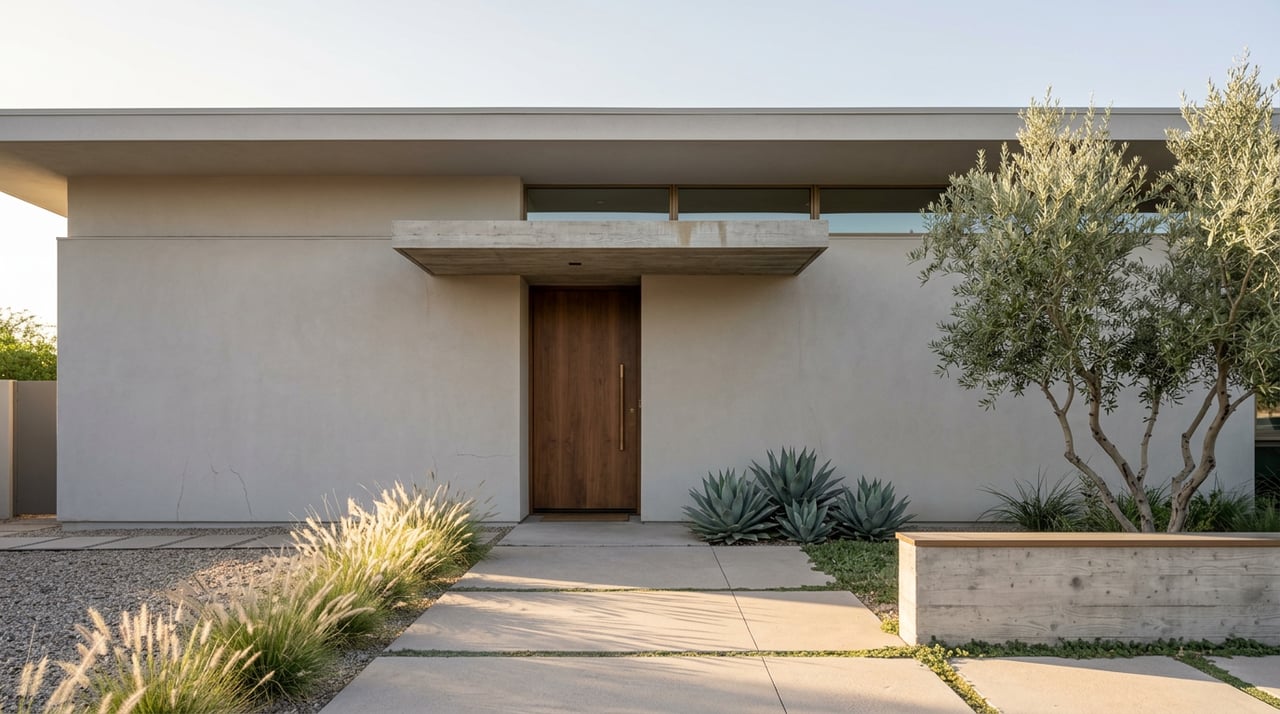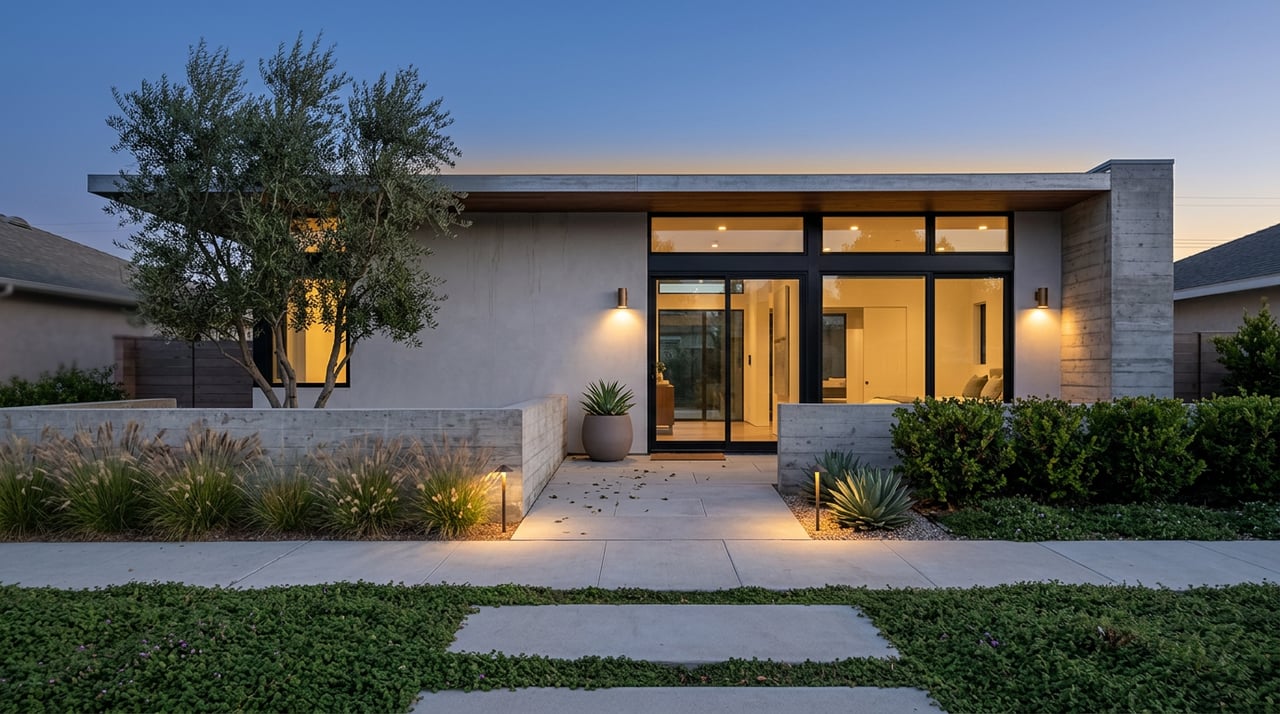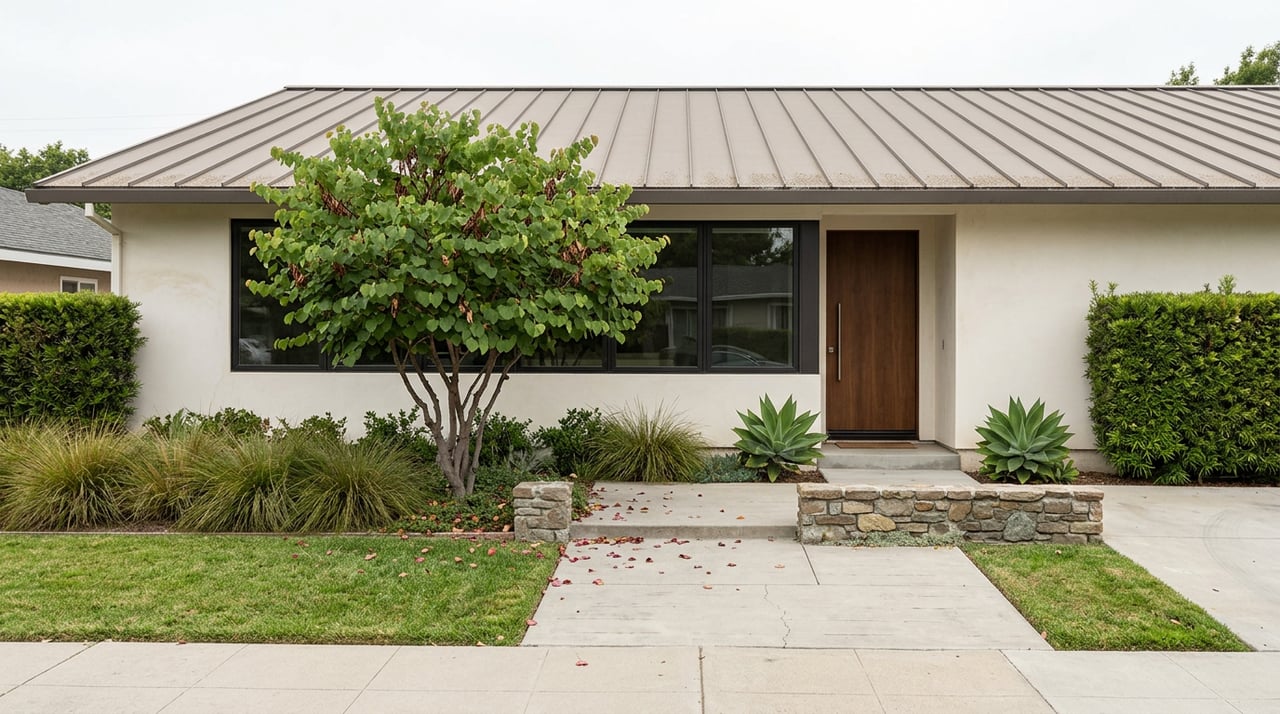
Ask what a Pasadena historic district restricts, and most people, buyers included, will describe the same short list: no vinyl windows, no aluminum siding, a form to fill out before anyone touches the porch. That description is accurate. It is also not the part of the designation that changes what a lot is actually worth.
Two parcels sit on the same street grid in northwest Pasadena. One falls inside the boundary of Bungalow Heaven. One sits two blocks north, outside it, same zoning, same decade of construction, same general footprint. Under state law, only one of those two lots can still be split into two parcels or converted into a duplex through a ministerial approval, no public hearing required. The other cannot, no matter how similar the two houses look from the sidewalk. That gap has nothing to do with paint colors, and almost nobody shopping a historic district address is told about it before they write an offer.
What a Certificate of Appropriateness Actually Covers
Start with the part everyone already half-knows, because it sets up the part they don't. Inside one of Pasadena's designated Landmark Districts, exterior work visible from the public street needs a Certificate of Appropriateness (COA) before the city will issue a building permit. That covers window and door replacement, porch reconstruction, additions, new garages, siding changes, demolition, and new construction. It does not cover interior renovation, paint color, landscaping, solar installation, or mechanical upgrades that aren't visible from the street. Bungalow Heaven's own building requirements page spells this out plainly for the roughly 800 designated craftsman bungalows inside its boundary, and every other Pasadena Landmark District runs on the same underlying zoning chapter.
The decision comes from the city's Design and Historic Preservation counter, staffed inside the Permit Center, and for most single-family alteration projects that's where the process starts and ends. This is the layer every historic-home buying guide covers, and it's real. It's just not the layer that determines whether the lot you're buying can do more than sit there as a single-family home.
The Timeline, By Review Track
Because the question always comes up in escrow, here's the city's own published guidance on how long a COA actually takes, broken out by who makes the call.
| Review track | Who decides | Typical timeline |
|---|---|---|
| Staff-level (minor projects) | Planning staff at the Design and Historic Preservation counter | 4 to 6 weeks |
| Historic Preservation Commission (major projects) | Nine-member commission, noticed public hearing | 6 to 8 weeks, longer if other entitlements or environmental review apply |
| Garfield Heights conservation plan (district-specific) | Neighborhood association-assisted staff review | 10 working days, per that district's own conservation plan |
That range is worth having in your back pocket if you're comparing a fixer in Bungalow Heaven to one outside any HPOZ boundary, since the second one skips this step entirely. But a six-week wait on a window swap is a scheduling problem. It's not the reason a district address and a non-district address a block away can carry different investment ceilings.
The Restriction With No Line on a Renovation Checklist
California's SB 9 lets an owner of an ordinary single-family R-1 lot split it into two parcels, or add a second unit, through a ministerial approval process the city has to grant if the application meets the standards. No public hearing, no discretionary review, no neighbor input required. It's the law that's reshaped how investors and move-up buyers think about an unremarkable single-family lot almost anywhere in the state.
Parcels located within a historic district, or individually designated as a local landmark or historic property, are generally exempt from that ministerial pathway. The exemption isn't a Pasadena quirk. It's written into how SB 9 itself treats historic resources statewide, and Pasadena's designated districts and individually landmarked properties fall squarely inside that carve-out.
For a buyer running the numbers on an R-1 lot, that's the fork in the road. Outside a historic boundary, the split-and-sell-separately math, or the build-a-second-unit-and-hold math, is available as a matter of right if the lot qualifies. Inside the boundary, that specific tool comes off the table, even though the house next door on the non-designated block, built the same year in the same style, still has it.
A designated block and the ordinary block behind it can look identical from the street. Only one of them can still split its lots under state law.
None of this shows up on a renovation checklist, because it isn't a renovation question. It's a question about what the parcel itself is legally permitted to become, and it belongs in the same conversation as the COA timeline, not a separate one.
Where the ADU Rule Cuts the Other Way
Accessory dwelling units work differently, and it's worth being precise about the difference rather than lumping ADUs in with SB 9. State ADU law preempts local historic district rules on size and setback. Under Pasadena's current ordinance, a detached ADU can run up to 1,200 square feet with a 25-foot height limit and 4-foot side and rear setbacks, and that math applies inside a Landmark District the same as anywhere else in the city. You can build a standard ADU on a historic district lot. The city cannot use the HPOZ designation to shrink it or push it further back on the parcel than state law allows.
Where the historic layer still reaches in is exterior design. If the ADU is visible from the public right of way, the Cultural Heritage Commission can still require its materials, window style, and roof form to read as compatible with the primary historic structure, even though the size and placement are already settled by state law. It's a narrower requirement than the COA process covers for the main house, but it's not zero.
One more override is worth knowing if a garage conversion is part of the plan. Properties within a half mile of one of Pasadena's four L (Gold) Line stations, Memorial Park, Del Mar, Fillmore, and Sierra Madre Villa, are exempt from ADU parking requirements under state law. That exemption stacks with the ADU size preemption and has nothing to do with historic status. For a buyer in Bungalow Heaven or Madison Heights weighing whether to convert a garage instead of building detached, distance to the nearest Gold Line platform is worth checking before assuming a replacement parking space is required.
What to Check Before You Write the Offer
- Search the property in Pasadena's historic resources database (CHRID) to confirm designated, contributing, or eligible status before assuming anything about your renovation or density plans.
- Ask the seller for the COA and permit history on the house, not just the general disclosure package. Unapproved past work can remain subject to the city's corrective process after a sale.
- If your plan involves a lot split, a duplex conversion, or anything that depends on SB 9's ministerial pathway, confirm the parcel's status with Pasadena Planning before your contingencies run, not after.
- If the title shows a Mills Act contract, read the actual terms. That's a separate tool from the COA and SB 9 questions here, and it comes with its own transfer mechanics worth understanding on its own.
- A short pre-application conversation with the Design and Historic Preservation counter, before you write the offer, can tell you whether your specific renovation plan lands on the 4-to-6-week staff track or the longer Commission track.
FAQ
Does historic designation stop me from selling the house? No. Landmark district status does not affect the use or sale of a property. It affects proposals to alter, demolish, or newly construct, not the transaction itself.
Can I still build a standard ADU inside a historic district? Yes. State law preempts local historic rules on ADU size and setback. The Cultural Heritage Commission can still weigh in on exterior materials and design if the ADU is visible from the street, but it can't shrink the unit or push back the setbacks beyond what state law allows.
Does every older-looking block in Pasadena carry these rules? No. Designation is drawn parcel by parcel and mapped by the city. A house that looks the same age and style as its neighbor isn't automatically covered just because it sits nearby. Checking CHRID directly is the only reliable way to know.
If you're weighing a Bungalow Heaven or Garfield Heights address against a similar house outside the boundary, the COA timeline is the easy part to plan around. The SB 9 question is the one that actually changes what the lot can become, and it's worth answering before you write the offer, not after you're in escrow. Alex Lozano works Pasadena's historic districts and the ordinary blocks around them regularly, and can help you read a specific parcel's status before you commit to a plan that depends on it. Let's Connect.